


Empowering
GST, E-Invoicing, and Real-Time Finance: How Indian Businesses Are Simplifying Compliance with Zoho Books
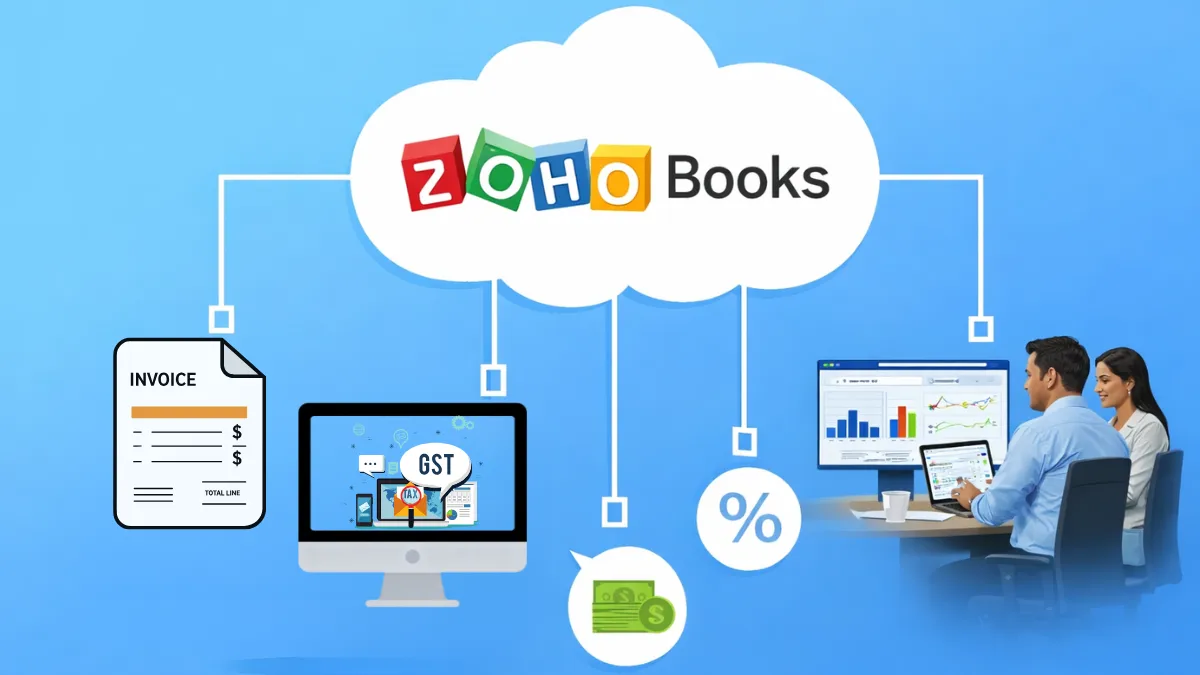
Introduction: GST Compliance Has Become an Operational Risk
For Indian businesses, GST compliance is no longer a quarterly accounting exercise handled at the end of the month. With mandatory e-invoicing, tighter validation rules, deeper integration between e-way bills and returns, and increasing scrutiny from tax authorities, compliance now sits at the heart of daily operations.
A delayed invoice, a rejected IRN, or a mismatch between returns can directly impact cash flow, Input Tax Credit (ITC), and audit exposure. Finance teams are spending more time fixing errors than analysing performance.
This shift has forced businesses to rethink one core question:
Is our finance system built for today’s GST reality—or just surviving it?
What Changed in India’s GST & E-Invoicing Landscape (And Why It Matters)
1. GST Returns Are Now System-Driven, Not Manual
GST returns increasingly rely on auto-populated data sourced from e-invoices uploaded to the Invoice Registration Portal (IRP). Errors made at the invoice stage now flow directly into returns, triggering:
- GSTR-1 and GSTR-3B mismatches
- ITC reversals
- Departmental notices
Manual corrections after the fact are becoming harder—and costlier.
2. E-Invoicing Validation Rules Are Tighter Than Ever
The government has strengthened validation across:
- Buyer legal name, GSTIN, state code, PIN code
- Dispatch-from and ship-to addresses
- HSN codes, tax rates, assessable values
- Batch numbers where goods move in lots
Invoices with incomplete or inconsistent data are rejected instantly by the IRP.
3. The ERP Is Responsible—Not the GST Portal
A persistent misconception still exists:
“The GST portal generates the e-invoice.”
In reality:
- The seller’s accounting or ERP system creates the e-invoice
- The IRP only validates and digitally signs it
- Invalid invoices never get registered
This means your accounting system is now a compliance system, whether you planned for it or not.
4. Compliance Inefficiency Is Now a Cash Flow Problem
- Rejected invoices delay billing.
- Delayed billing slows collections.
- Blocked ITC strains working capital.
GST compliance failures now have a direct financial impact, not just a regulatory one.
Why Indian Businesses Are Moving to Unified GST Compliance Systems
Fragmented setups—one tool for accounting, another for GST uploads, spreadsheets for reconciliations—create blind spots that are no longer acceptable.
Businesses are moving toward single-system compliance, where:
- Invoices are created once
- Validated automatically
- Uploaded directly to the IRP
- Synced with GST returns
- Tracked in real time
This is where Zoho Books is increasingly being adopted by Indian finance teams.
How Zoho Books Simplifies GST, E-Invoicing, and Real-Time Finance
Direct IRP Integration (No External GSP Dependency)
Zoho is a recognized GST Suvidha Provider (GSP).
Invoices are uploaded directly to the IRP, eliminating dependency on third-party tools and reducing failure points.
Invoices are validated, digitally signed, and issued an IRN without leaving the system.
Smart Validation Before Submission
Zoho Books validates invoice data before it reaches the IRP, flagging:
- Missing mandatory fields
- Invalid GSTINs or state codes
- Incorrect HSN classifications
- Tax calculation inconsistencies
This “right-first-time” approach significantly reduces rejections and rework.
Recurring E-Invoices for Predictable Billing
For subscription-based or repeat billing:
- E-invoices can be scheduled on a recurring basis
- Invoices are auto-generated
- Uploaded to the IRP
- Sent to customers automatically
This is especially effective for services, retainers, and long-term contracts.
Multiple GSTINs with Centralised Visibility
For businesses operating across states:
- Multiple GST registrations are managed in one system
- Branch-wise transactions remain traceable
- Consolidated GST exposure is visible in real time
This removes the need for manual branch-level reconciliations.
Integrated E-Way Bill Generation
Once Zoho Corporation is registered as your GSP:
- E-way bills are generated directly from invoices
- Dispatch, shipping, and tax data stay consistent
- Duplicate data entry across portals is eliminated
As integration between e-invoicing and e-way bills deepens, this becomes critical.
REST APIs for Advanced Automation
For businesses with custom billing systems:
- Zoho Books offers REST APIs
- E-invoices can be pushed directly to the IRP
- High-volume or industry-specific workflows remain supported
This allows compliance automation without rigid ERP lock-in.
Solving the Most Common GST Compliance Failures in India
GSTR-1 and GSTR-3B Mismatches
The issue:
Invoice values, taxes, or classifications do not align across returns, leading to notices and reversals.
How Zoho Books helps:
- Single source of invoice creation and tax computation
- Consistent data flowing from invoices to returns
- Reduced manual adjustments between filings
Accuracy at source prevents downstream mismatch risk.
Input Tax Credit (ITC) Blockages
The issue:
Missing invoices, incorrect GSTINs, or vendor non-compliance result in denied ITC, impacting working capital.
How Zoho Books helps:
- Structured invoice data capture
- Clear visibility into eligible vs ineligible ITC
- Better vendor-wise compliance tracking
Finance teams identify ITC risks early, not during audits.
Late Filing Penalties and Interest
The issue:
Manual tracking, data cleanup, and last-minute reconciliations cause missed deadlines.
How Zoho Books helps:
- Return-ready data available continuously
- Reduced dependency on spreadsheets and offline tools
- Faster filing cycles with fewer corrections
Compliance becomes predictable instead of reactive.
Audit Stress and Rising Compliance Costs
The issue:
Poor documentation, missing trails, and inconsistent records increase audit time and professional fees.
How Zoho Books helps:
- Maintains structured audit trails
- Centralised storage of validated invoice and tax data
- Strong traceability across invoices, returns, and payments
Audit readiness becomes part of daily operations—not a fire drill.
Real-Time Finance: The Hidden Advantage of GST Automation
When compliance runs in real time:
- Invoices move faster
- IRNs are generated without delay
- Collections improve
- Cash flow forecasts become reliable
- Audit risk reduces continuously
GST automation stops being a defensive move and becomes a financial advantage
FAQs: Real Questions Indian Finance Leaders Ask
Will automated GST systems reduce our dependency on consultants?
Automation reduces manual effort and errors, but consultants still play a role in interpretation and advisory. The difference is fewer corrections, notices, and emergency filings.
Can Zoho Books handle future GST changes without disruption?
Yes. Cloud-based updates allow regulatory changes to be absorbed without re-implementation or system overhauls.
Is this suitable for growing businesses, or only small companies?
Zoho Books is particularly effective for growing businesses that need structured compliance without the overhead of heavy ERP platforms.
Does automation increase audit exposure by making data more visible?
No. Clean, consistent, and traceable data reduces audit risk. Audits become faster and less intrusive when records are reliable.
Is partial e-invoicing automation enough?
Increasingly, no. As validation tightens, partial or manual processes introduce compliance risk. End-to-end automation is becoming the safer option.
Final Takeaway
GST compliance in India has moved beyond filing returns.
It now affects billing speed, ITC recovery, audit readiness, and cash flow.
Businesses that automate early gain:
- Accuracy
- Speed
- Financial clarity
Those that delay face rising penalties and operational drag.
Zoho Books enables Indian businesses to meet today’s GST demands without turning compliance into an ERP burden—and that balance is exactly what finance teams need in 2026.

.webp)



.svg)